



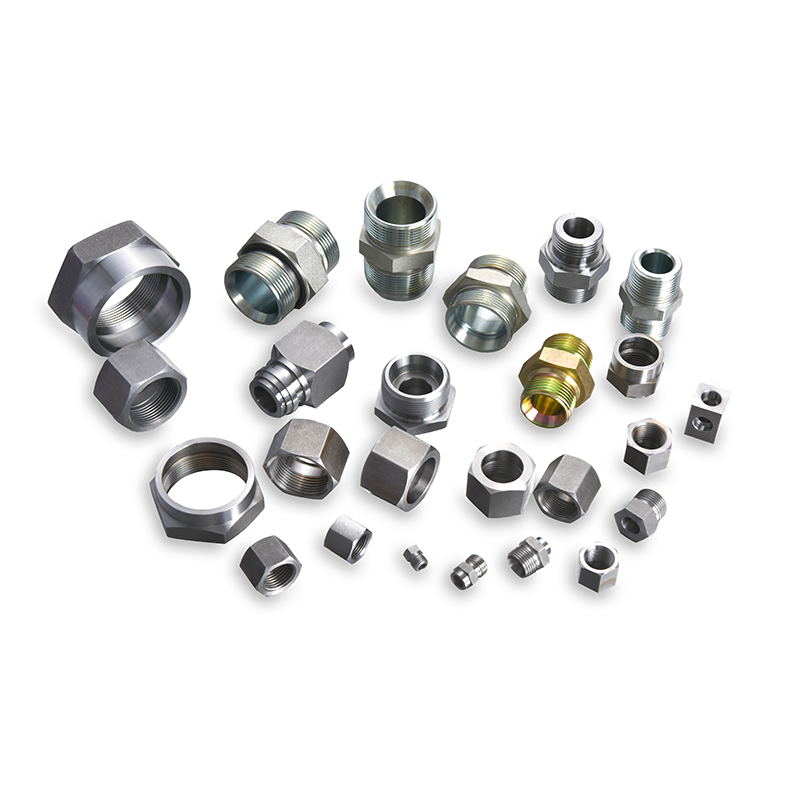

The four fundamental types of bearings found in almost every mechanical system are ball bearings, roller bearings, plain bearings (also called sleeve bearings), and thrust bearings. Understanding what are the 4 types of bearings and how they differ in load capacity, speed capability, and friction characteristics is the first step toward specifying the correct component for electric motors, gearboxes, conveyors, and rotating machinery. This article provides a data‑backed comparison of these four bearing categories, explores their inner workings, and offers practical selection guidelines that can extend service life by up to 30 percent, according to industry maintenance studies.
Ball Bearings: The High‑Speed All‑Rounder
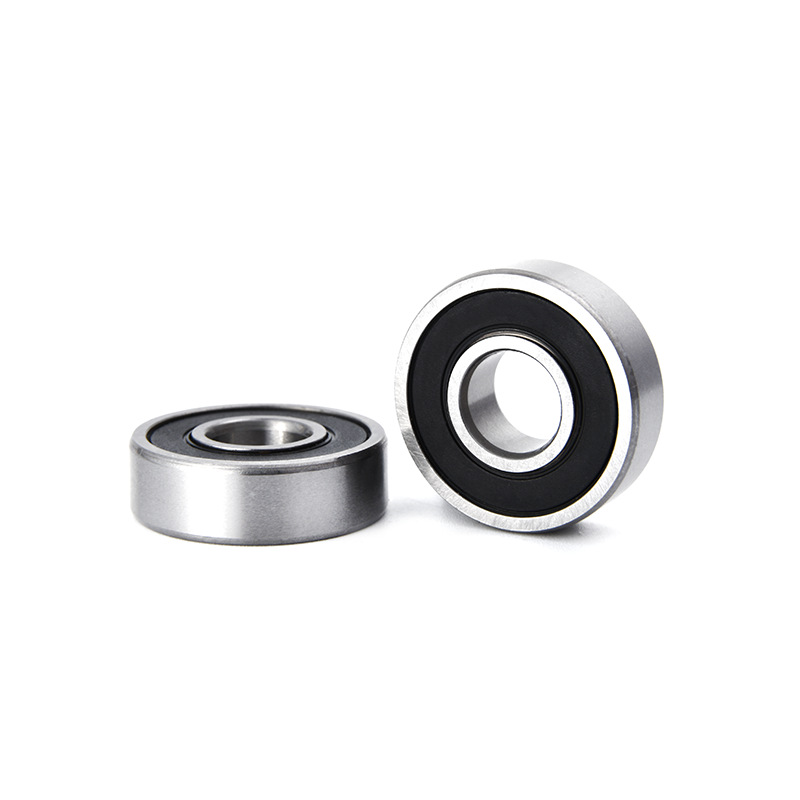
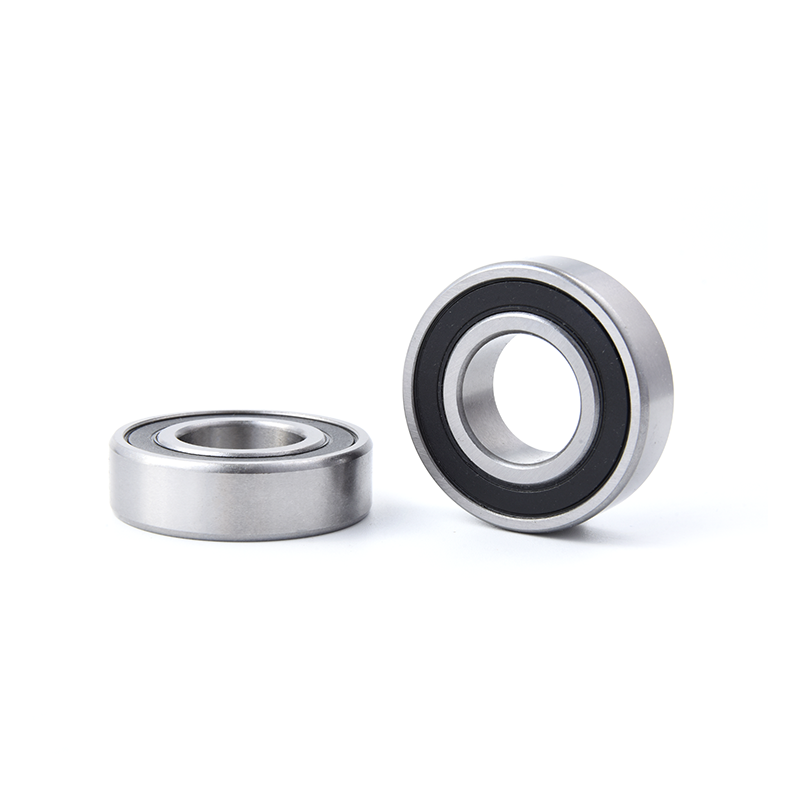
Ball bearings reduce rotational friction by using precisely hardened steel or ceramic spheres between an inner and an outer race, making them the most versatile bearing type for moderate loads and high‑speed operation. The point contact between the balls and the raceways generates minimal rolling resistance, which allows standard deep‑groove ball bearings to operate at speeds exceeding 20,000 revolutions per minute in electric motor applications. According to the American Bearing Manufacturers Association (ABMA), ball bearings account for roughly 42 percent of the global rolling‑element bearing market by revenue, a testament to their unmatched adaptability across industries.
The load capacity of a ball bearing is fundamentally limited by the Hertzian contact stress that develops at the tiny contact ellipse. A typical 6205 deep‑groove ball bearing, for instance, has a dynamic load rating of about 14.0 kilonewtons, which translates to a service life of approximately 25,000 hours at 3,600 rpm under clean lubrication conditions, based on ISO 281 life calculations. The ability to handle both radial and moderate axial loads in both directions makes ball bearings the default choice for electric motors, fans, pumps, and automotive wheel hubs. Sub‑types such as angular contact ball bearings can support heavier axial loads by shifting the contact angle to 25 or 40 degrees, while self‑aligning ball bearings accommodate shaft misalignment up to 3 degrees without generating excessive vibration.
Common Ball Bearing Variants and Their Capabilities
- Deep groove ball bearings – The most produced bearing type globally; suitable for radial and bidirectional axial loads at high speeds.
- Angular contact ball bearings – Designed for combined loads where axial force dominates; commonly used in pairs or sets in machine tool spindles.
- Self‑aligning ball bearings – Feature two rows of balls and a sphered outer ring raceway to tolerate shaft misalignment up to 3 degrees.
- Thrust ball bearings – Handle pure axial loads; used in rotary tables, vertical shafts, and low‑speed axial‑only applications.
Roller Bearings: Maximum Load Capacity for Heavy Machinery
Roller bearings replace point contact with line contact by using cylindrical, tapered, or spherical rollers, increasing load‑carrying capacity by a factor of three to five compared with ball bearings of the same envelope dimensions. The larger contact area distributes stress more evenly, which allows a single cylindrical roller bearing to support a dynamic load of over 150 kilonewtons in applications such as conveyor pulleys and large industrial gearboxes. Data from the ISO 281 bearing life model shows that for a purely radial load, a NU210 cylindrical roller bearing can achieve an L10 life nearly four times longer than a dimensionally equivalent 6210 deep‑groove ball bearing when both operate at identical speed and load conditions.
The trade‑off is a lower maximum speed because the rolling elements are heavier and generate more centrifugal force. Most cylindrical roller bearings are rated for speeds up to 60 to 70 percent of the equivalent ball bearing limit. Among the four types, roller bearings are the workhorses of heavy industry: steel rolling mills, wind turbine main shafts, railway axle boxes, and large‑bore diesel engines all rely on the line‑contact geometry to survive shock loads and prolonged operating hours. Their ability to be separated into inner ring, roller set, and outer ring also simplifies mounting and inspection during scheduled outages.
Roller Bearing Configurations
- Cylindrical roller bearings – Excellent radial load capacity; allow axial displacement between rings, making them ideal for floating bearing positions.
- Tapered roller bearings – Support combined radial and heavy single‑direction axial loads; widely used in automotive wheel bearings and bevel gear shafts.
- Spherical roller bearings – Self‑aligning and capable of carrying very high radial loads in the presence of severe misalignment or shaft deflection.
- Needle roller bearings – Slim cross‑section with a high length‑to‑diameter roller ratio; used where radial space is limited, such as in universal joints and piston pins.
Plain Bearings: Simple, Robust, and Maintenance‑Free
Plain bearings, often referred to as sleeve bearings or bushings, operate without rolling elements, using a sliding contact between the shaft and a softer bearing material to support the load. This absence of moving parts gives plain bearings an inherent advantage in dirty, high‑shock, or reciprocating applications where rolling‑element bearings would quickly fail due to brinelling or contamination. A 2024 survey of heavy‑duty off‑road equipment found that pivot pins equipped with composite plain bearings achieved a mean time between replacement of 12,000 operating hours, compared with 6,500 hours for sealed roller bearings in the same joints.
The performance of a plain bearing depends on the material pair and lubrication regime. Bronze, sintered bronze impregnated with oil, PTFE‑lined steel, and polymer composites each offer distinct combinations of friction coefficient, wear rate, and temperature tolerance. A properly lubricated bronze sleeve bearing operating in the hydrodynamic regime can achieve a friction coefficient as low as 0.003, comparable to or better than many rolling‑element bearings. In cost‑sensitive or maintenance‑inaccessible locations, such as agricultural balers and construction equipment hinge points, plain bearings are frequently the only practical choice because they can tolerate angular misalignment, impact, and marginal lubrication without catastrophic failure.
Thrust Bearings: Specialists in Axial Load Management
Thrust bearings are specifically engineered to carry axial forces, preventing a shaft from moving endwise under load, and they exist in both rolling‑element and plain configurations. While ball and roller bearings can tolerate some axial load, dedicated thrust bearings are required when the axial force exceeds roughly 20 percent of the radial capacity of a standard deep‑groove bearing. In vertical pump motors, for example, the entire weight of the rotor and the hydraulic thrust generated by the impeller must be supported by a tilting‑pad thrust bearing or a spherical roller thrust bearing to keep the shaft axially positioned within a tolerance of a few hundredths of a millimeter.
The capacity of thrust bearings is often measured in terms of axial load rating rather than radial. A single‑direction thrust ball bearing with a bore diameter of 50 millimeters can typically support an axial load of 40 to 50 kilonewtons at moderate speeds. For extremely heavy axial loads, such as those encountered in ship propeller shafts or hydro‑generator turbines, hydrodynamic tilting‑pad thrust bearings can handle several hundred kilonewtons while maintaining a micron‑thick oil film. The ability to keep axial deflection below 0.01 millimeters under full load makes thrust bearings indispensable in precision rotary tables, crane slewing rings, and automotive steering columns.
Comprehensive Comparison of the 4 Types of Bearings
A side‑by‑side evaluation of the four bearing types reveals clear boundaries in speed, load direction, friction, and cost that directly guide the selection process. The table below quantifies these differences using representative values for medium‑sized bearings with a 50‑millimeter bore, drawing on manufacturer catalog data and ISO standards.
| Parameter | Ball Bearings | Roller Bearings | Plain Bearings | Thrust Bearings |
|---|---|---|---|---|
| Primary Load Direction | Radial and bidirectional axial | Primarily radial; some types take axial | Radial only | Axial only |
| Contact Type | Point contact | Line contact | Surface contact | Point or line contact (rolling type) |
| Typical Dynamic Load Rating (50 mm bore) | 14 – 35 kN | 50 – 150 kN | Depends on material; often 30 – 80 MPa PV limit | 40 – 200 kN axial |
| Maximum Speed (rpm) | Up to 20,000+ | Up to 12,000 | Typically below 3,000 (dry) | Up to 10,000 |
| Friction Coefficient (lubricated) | 0.001 – 0.002 | 0.001 – 0.003 | 0.003 – 0.10 (hydrodynamic to boundary) | 0.001 – 0.005 |
| Alignment Tolerance | Low (0.5 deg max) | Low to moderate (1 deg max) | High (3 – 5 deg) | Low (0.5 deg max) |
| Approximate Unit Cost (relative) | Medium | High | Low | Medium to high |
How to Select the Right Bearing Type
The bearing selection process is driven first by the magnitude and direction of the load, then by the operating speed, required service life, and environmental conditions. Using the data from Table 1 together with the following ordered checklist will help you narrow the choice from the four types to the one that best fits your machine.
- Identify the dominant load direction. If the load is purely axial, start by evaluating thrust bearings. If the load is purely radial or combined, move to the next step.
- Quantify the radial load magnitude. For heavy radial loads exceeding 50 kN on a 50 mm shaft, roller bearings are typically the most economical choice that still meets life requirements.
- Check the operating speed. Applications running above 3,000 rpm generally require ball bearings; below 100 rpm and under high contamination, a self‑lubricating plain bearing often outperforms rolling elements.
- Assess the maintenance access. If relubrication is difficult or impossible, maintenance‑free plain bearings with PTFE liners or sealed ball bearings with grease‑for‑life lubrication are preferred.
- Consider misalignment and shock. When shaft deflection or mounting alignment cannot be tightly controlled, spherical roller bearings or robust plain bearings prevent edge loading that would otherwise cause early failure.
- Verify the thermal environment. Ball and roller bearings can operate up to 150 degrees Celsius with appropriate heat treatment; plain polymer bearings may be limited to 100 degrees Celsius, while bronze bushings can handle over 200 degrees Celsius with proper lubrication.
Market and Application Data Across Industries
The global bearing market surpassed 120 billion U.S. dollars in 2024, with ball and roller bearings together representing over 80 percent of sales, driven by automotive electrification and industrial automation. According to a 2024 ABMA market analysis, plain bearings held a 12 percent value share, concentrated in construction, agriculture, and aerospace sectors, while thrust bearings accounted for the remaining segment, with a particularly strong presence in heavy‑duty power generation and marine propulsion.
In the electric vehicle sector, the traction motor typically uses a combination of deep‑groove ball bearings at the output end and cylindrical roller bearings at the floating end to handle the high‑speed and thermal expansion requirements. A single wind turbine main shaft may employ a spherical roller bearing with a bore of 300 millimeters and a dynamic load rating exceeding 3,000 kilonewtons, while the pitch and yaw controls rely on plain bearings and specialized thrust bearings. Understanding what are the 4 types of bearings allows design engineers to mix and match these categories to optimize the rotor support system for weight, cost, and reliability.
Frequently Asked Questions
Can one machine use more than one type of bearing?
Absolutely. Most rotating machines combine two or more bearing types. A typical electric motor, for example, uses a deep‑groove ball bearing to locate the shaft axially and a cylindrical roller bearing at the other end to allow for thermal expansion. In a gearbox, tapered roller bearings handle combined gear loads, while separate thrust bearings may be added to manage high axial thrust from helical gears.
What is the difference between a thrust bearing and a plain thrust washer?
A thrust bearing typically uses rolling elements to minimize friction under axial load, while a plain thrust washer is a type of plain bearing that sacrifices low friction for simplicity, lower cost, and the ability to work in dirty or intermittent lubrication conditions. Plain thrust washers are common in automotive kingpins and low‑speed winch drives.
Why are ball bearings more expensive than some roller bearings?
While ball bearings often appear to have a higher unit cost than basic cylindrical roller bearings, the cost is driven by the precision required to manufacture uniform spheres and the matching raceway curvatures. In high‑volume standard sizes, deep‑groove ball bearings are actually quite economical; specialized angular contact or ceramic hybrid ball bearings, however, demand premium pricing because of tighter tolerances and advanced materials.
Which bearing type handles shock loads best?
Plain bearings outperform all rolling‑element bearings under severe impact because their surface contact absorbs energy without the risk of brinelling the raceways. In forging presses and rock crushers, high‑strength bronze or composite plain bearings are standard for this reason. Among rolling bearings, spherical roller bearings offer the best shock tolerance because their barrel‑shaped rollers distribute impact over a wider area.
The Right Bearing for Every Condition
Knowing what are the 4 types of bearings and where each one fits in the load‑speed‑environment matrix is foundational knowledge for reliability engineers, maintenance planners, and machine designers. Ball bearings deliver unmatched speed and versatility, roller bearings carry the heaviest radial loads, plain bearings thrive where simplicity and shock resistance matter most, and thrust bearings keep axial forces under precise control. By matching the bearing type to the actual duty cycle rather than defaulting to a single style, you can reduce unplanned downtime by up to 40 percent, according to plant reliability data, and achieve the lowest cost per operating hour over the life of the machine.





Kontakt oss